Figure 1:Indentation Comparison
Three materials exhibit divergent indentation responses: dislocation mediated deformation in copper, twinning in magnesium, and buckling in graphite. While the metals show residual deformation, graphite fully recovers to its original state.
Graphite is mechanically unusual. Its strong covalent bonds make individual layers stiff and resilient, while comparatively weak bonding between layers allows the crystal to deform in ways unavailable to most engineering materials. Under sufficiently large compressive strain, graphite does not simply yield through conventional plastic deformation. Instead, entire regions of the crystal can buckle collectively, redistributing strain through reversible out-of-plane deformation.
Buckled Volumes from Resolved Planar Compression
The simulations presented here explore this behavior across a variety of loading conditions. Under indentation and shear, graphite develops localized bands of curvature that propagate through many layers simultaneously. These buckled regions exhibit altered effective elastic properties, and can form in response to both external loading and internal defect structures. Together, these results suggest that buckling has significant unexplored potential as a first-class deformation in layered materials.
Indentation
To investigate how multilayer graphite responds to large compressive strains, a cylindrical indenter was driven into the edge of a graphite crystal. Unlike the single-layer configurations often used to study ripplocations, indentation simultaneously loads many adjacent layers and therefore probes a more realistic mechanical environment.
Buckling first appears directly beneath the indenter at relatively small local compressive strains. As loading increases, neighboring layers assist one another and the buckled region spreads through the crystal. At moderate indentation depths, deformation concentrates into narrow high-curvature bands that separate nearly planar regions of rotated graphite. These structures closely resemble the multilayer ripplocation boundaries observed in independently compressed systems.
At larger strains, the response becomes increasingly complex. Individual buckled bands interact, merge, and fold into highly curved structures capable of accommodating local compressive strains exceeding twenty percent. Despite these large local distortions, the crystal fully recovers when the load is removed. No permanent deformation remains and repeated loading cycles produce nearly identical mechanical response.
Figure 2:Graphite Indentation
Figure 3:Low Strain: Orderly Multilayer Buckling
Moderate indentation produces narrow buckled bands that separate nearly planar regions of rotated graphite. Neighboring layers buckle cooperatively, creating a collective deformation mode that spans many atomic planes.
Figure 4:High Strain: Complex Folded Structures
At larger indentation depths, the aligned buckling pattern gives way to a more complex network of folds and highly curved regions. These structures accommodate extremely large local compressive strains while remaining fully reversible upon unloading.
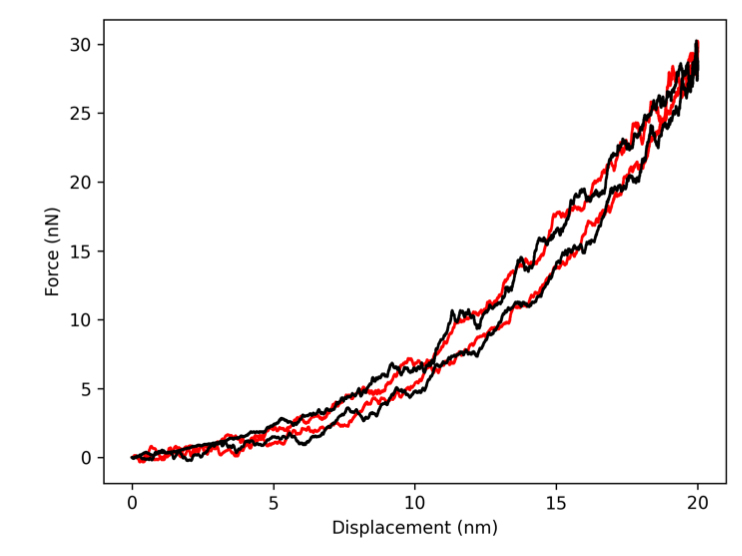
Figure 5:Mechanical Hysteresis during Indenatation
The interlayer friction between layers as well as mechanical energy loss from folding and unfolding was found to produce significant mechanical hysteresis and energy dissipation. This confirms the original theories that motivated this project.
Planar Shear
In-plane shear can also produce the in-plane compressive strains necessary for buckling. While our previous work had focused primarily on comparisons between dislocations and ripplocations, this shear state is notable in that it is practically unable to produce dislocations in graphite. Instead, the system deforms linearly elastically before buckling along the direction of principal strain.
Figure 6:Planar Shear Buckling
In-plane shear response of graphite.
Plane-normal compression of the resulting buckled structures shows a materially different mechanical response than expected from the ideal crystal structure. In-plane shear produced compressive strain that produced buckling; plane-normal compression flattens the buckles, producing in-plane compression than unshears the system. This coupling between $sigma_{33}$ and $varepsilon_{12}$ is normally prohibited by the crystal structure, but buckling breaks the symmetry and allows new mechanical couplings.
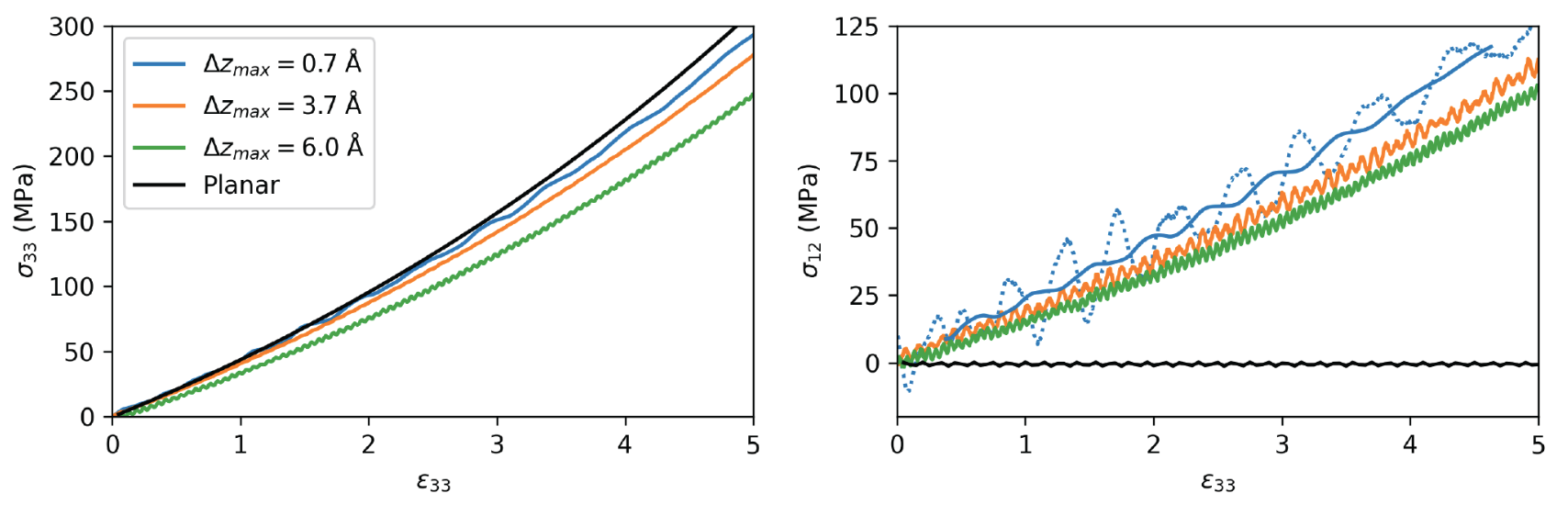
Figure 7:Compression Response of Buckled Structures
Plane normal compression response of buckled snapshots from in-plane shear deformation.
Non-basal Dislocation Dipole
Stone-wales defects in graphene are known to produce compressive strains in graphene that are large enough to induce buckling. When stacked, these form non-basal dislocations, which produce compressive strains large enough to create buckled regions in graphite.
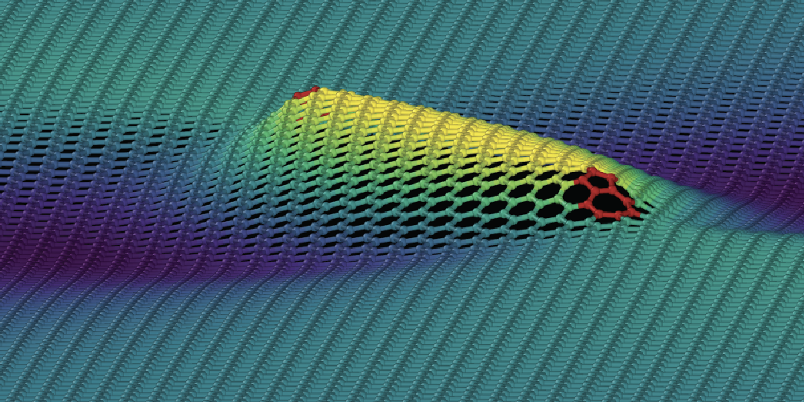
Figure 8:Buckling Induced by Stone-Wales Defect Pair
The in-plane resolved compressive strain produced by a pair of Stone_Wales defects (shown in red) is also able to induce buckling on a single graphene sheet.
Figure 9:nonbasal_volume
Multiple Stone-Wales pairs are aligned across multiple layers to form a non-basal dislocation dipole. The resulting strain state induces a small, finite buckled volume.
Implications
Buckling in layered may occur as a result of in-plane compressive stress, which is ubiquitious in of real systems to both external stimulus and internal defect structures. Buckling also modifies the local mechanical reponse beyond what would be predicted from normal linear elastic or dislocation-mediated deformation. Buckled "precipates" within a matrix of more ideal planar regions may allow layered crystals to exhibit a tunable mechanical response similar to TRIP/TWIP metals.
Further Reading
Atomic-scale buckling defects in layered crystalline materials
J. Gruber
Colorado School of Mines. Arthur Lakes Library
(2024)
[link]